-
Does Europe Have Its Own AI?
There’s a hum you learn to recognize if you spend time on a modern factory floor. Not the dramatic kind from a movie — just the steady, low sound of machines doing their work: conveyor belts moving, arms positioning, sensors ticking. And then, occasionally, a quiet alert. Not a siren. A small warning on a screen: a bearing will likely fail in the next few days. A camera has spotted a hairline crack that the human eye would miss. A schedule is drifting, and the system has already suggested a re-route that saves hours of downtime. That’s artificial intelligence at work. Not a chatbot. Not a text box. Not the…
-
Strategic Reset: Why an Early Leadership Transition Could Shield the CDU from Upcoming Election Losses
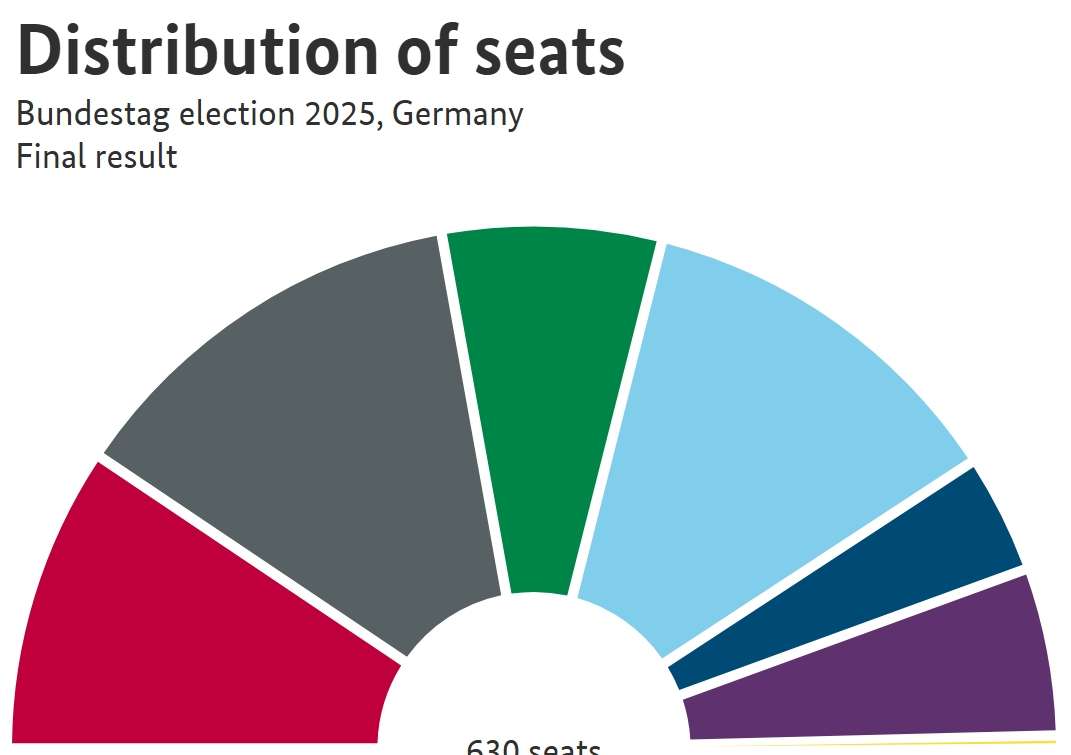
Despite a comprehensive federal cabinet restructuring, the current black-red coalition government continues to face historic lows in public approval. With critical state elections approaching in September 2026, an analytical assessment of current polling data, regional dynamics, and stagnating economic indicators suggests that an early leadership transition from Friedrich Merz could serve as a necessary political fail-safe. Rather than an indictment of character, a strategic handover offers a mechanism to protect the long-term institutional stability of the Christian Democratic Union (CDU). The Polling Landscape: Structural Pressure on Party Leadership Recent quantitative data highlights significant structural headwinds for the current administration: From a strategic standpoint, the argument for a leadership change is…
-
Brussels Talks and the Logic of Trade War: Why Escalation May Be Inevitable in EU–China Relations
On June 29, 2026, European Union Trade Commissioner Maroš Šefčovič met China’s Commerce Minister Wang Wentao in Brussels in what officials described as a pivotal moment for the future of EU–China economic relations. The meeting unfolded against a backdrop of deepening tensions, a widening trade imbalance—estimated at around €360 billion in goods—and rising political pressure in Europe to adopt a tougher stance toward Beijing. Despite the high stakes, expectations for a breakthrough were notably low. The talks were not only about tariffs, subsidies, or trade rules—but about something much deeper: two competing models of economic and political development. A Meeting Doomed to Deliver Little The Brussels encounter was framed by…
-
Germany, China, and the EU: From Deep Interdependence to Managed Strategic Friction
Germany’s relationship with China is undergoing a profound transformation. For decades, Berlin treated China primarily as an engine of opportunity: a market for German exporters, a production base for global firms, and a pillar of industrial profitability. That approach was rooted in a broader German strategic culture often summarized as “Wandel durch Handel”—the belief that trade and interdependence could moderate political differences and, over time, encourage convergence. Today, that paradigm is giving way to a much less optimistic model. Germany still seeks to preserve economic ties with China, but it is increasingly attempting to do so under the logic of de-risking: reducing strategic vulnerabilities while continuing selective engagement. This shift…
-
The “Mother of All Deals” or Just a Masterclass in Optics?
This week, Indian Prime Minister Narendra Modi has been making headlines across Europe, conducting a high-speed diplomatic tour through the Netherlands, Sweden, Norway, and Italy. The focal point of the trip is a series of high-level meetings aimed at finalizing a massive trade agreement with the European Union—a pact so vast in scale that officials are already calling it the “mother of all deals.” While the official narrative paints a picture of seamless cooperation and “historic opportunities,” the timing and scale of these talks suggest something far more calculating is happening behind the scenes. The press releases are swirling with the kind of superlatives usually reserved for epic poetry. “Historic…